
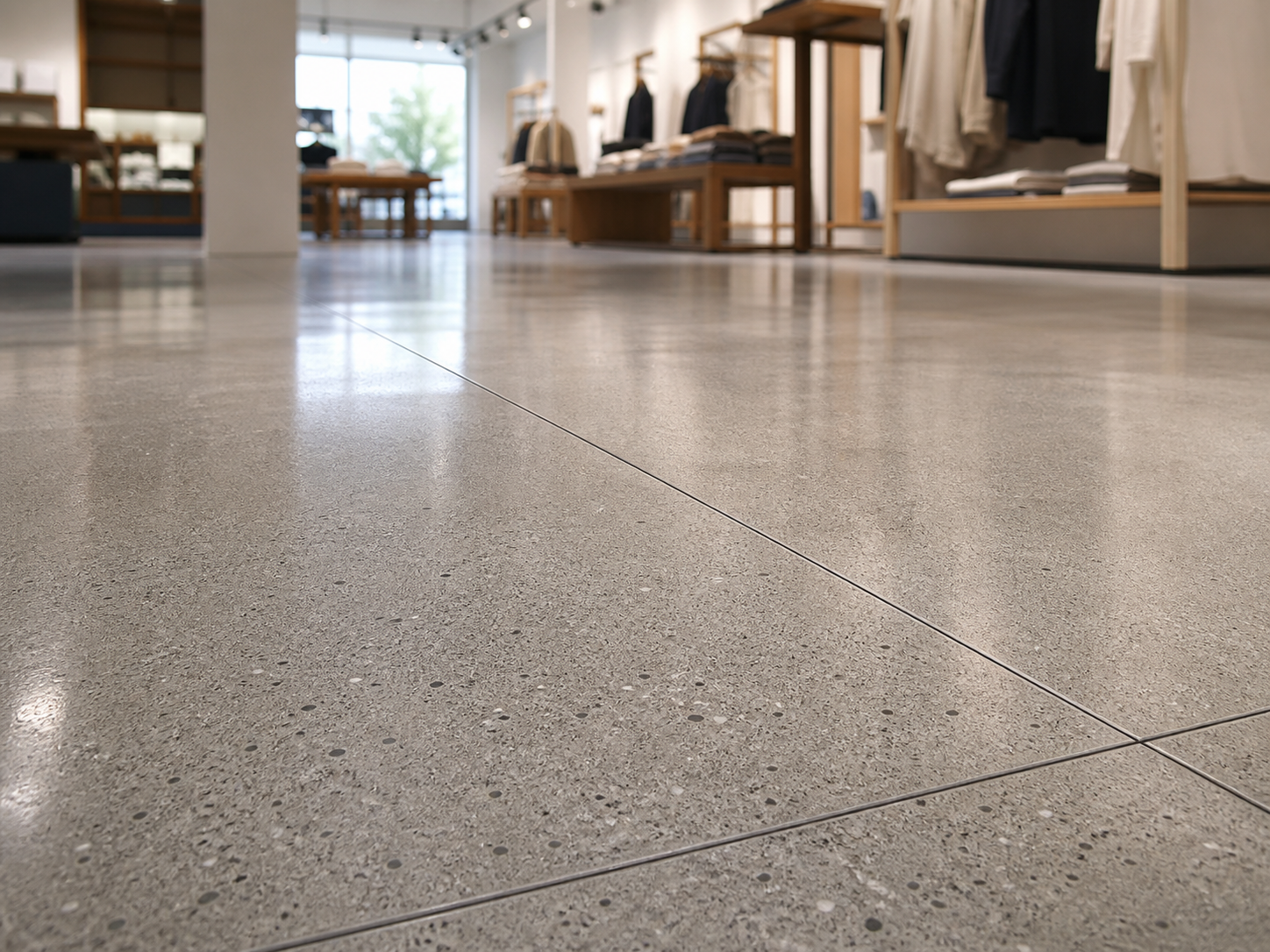
Polished concrete has quietly become one of the most popular flooring choices for modern homes, showrooms, offices and warehouses. It takes an ordinary concrete slab and transforms it into a smooth, durable, low-maintenance surface with a sleek, reflective finish. If you have concrete under your existing floor, or you’re pouring a new slab, polishing may be one of the most cost-effective and long-lasting options available to you.
In this guide, we walk through what makes concrete suitable for polishing, the step-by-step process our crews follow, and the finishing touches that keep a polished floor looking its best for years.
Is Your Concrete Suitable for Polishing?
Not every slab is the same. Polishable concrete generally falls into three categories: existing concrete that has already been poured and cured, a polishable overlay applied when the original surface is too damaged or uneven, and decorative concrete designed specifically for polishing, sometimes with added aggregates or colour for a higher-end look.
The single most important factor is surface hardness. Before we begin, we carry out a scratch test, sometimes measured against the Mohs hardness scale, to see how the concrete responds. Softer concrete polishes more easily but may first need densifying, while very hard concrete requires more aggressive diamond tooling. Knowing the hardness up front lets us choose the right tools and give you an honest, accurate estimate.
The Grind & Polish Process, Step by Step
Polishing concrete isn’t a single action, it’s a sequence of stages using progressively finer diamond tools, plus densifiers and sealers. Here’s how a typical project unfolds.
1. Surface prep and rough grind
We remove old coatings, adhesives and contaminants, then use coarse metal-bond diamonds, often starting around a 30-grit tool, to level the slab and expose the aggregate beneath. This establishes a flat, even surface to build on.
2. Repairs and edges
Cracks, joints and small holes are filled, and where needed we apply a product like Ardex to smooth imperfections. Edges and corners, which standard machines can’t reach, are finished with specialized tools so they match the rest of the floor.
3. Densifying
A chemical densifier is applied, usually after the early grinding stages. It penetrates the concrete and reacts to harden the surface, reduce porosity, and improve stain and abrasion resistance, preparing the floor for a better final polish.
4. Progressive polishing
We work up through finer resin-bond grits, 100, 200, 400, 800 and, for a true mirror finish, up to 1500. With each pass the floor grows smoother and glossier. The level of sheen is a choice: a satin matte look and a high-gloss shine are both achievable.
5. Seal and burnish
Finally, a sealer protects the surface from stains and wear, and a high-speed burnish brings up the final shine. The result is a floor that’s easy to clean, resistant to daily traffic, and built to last.
Why Professional Installation Matters
The finished look of a polished floor depends on far more than the final polishing pass. Moisture testing, proper surface preparation, correct densifier timing, and the right grit sequence all shape the outcome. Skipping or rushing a stage can lead to uneven colour, poor gloss, or premature wear.
That’s why an experienced crew, the right diamond tooling and quality materials make such a difference. Done well, a polished concrete floor is one of the most durable and low-maintenance surfaces you can own.
Is Polished Concrete Right for You?
Polished concrete works beautifully in showrooms, offices, retail spaces, hotels, warehouses and increasingly in modern homes, especially open-plan living areas, kitchens and basements. It’s dust-resistant, reflects light to brighten a room, and stands up to heavy traffic with minimal upkeep.
If you’re weighing your options, the best next step is a quick assessment of your existing slab. We’re happy to take a look, test the surface, and talk through whether polishing, a coating, or another flooring system is the right fit for your space and budget.
Thinking About Polished Concrete?
Book a free flooring assessment and we’ll tell you honestly what will work best for your space.
Get a Free Estimate → See Our Flooring Services

 GSHC
GSHC 
Leave a comment